
A patient encounters more than a treatment room during a dental visit. Reception seating, doors, corridors, and restrooms all contribute to the condition of the practice. Behind those visible spaces, staff also need a routine that respects appointments, confidential material, restricted access, and responsibilities that remain with clinical personnel.
Planning the cleaning around that journey gives each area a clear role without treating the entire practice as an ordinary office. Start with the spaces patients and staff actually use. Then establish the boundary between environmental tasks assigned to an outside crew and procedures controlled by the practice itself.
Begin with the patient-facing route
Patient and staff restrooms need a regular schedule. Fixtures, sinks, floors, mirrors, waste, supplies, and high-touch areas should be included according to traffic. Dental practices may have hard flooring, resilient flooring, carpet, or a combination. Routine cleaning should match the material, with periodic detailed floor care scheduled separately.
Breakrooms, staff offices, storage spaces, and corridors can be overlooked when the focus stays on treatment rooms. A complete cleaning plan should identify these areas. The practice manager should have a clear contact for missed tasks, schedule changes, additional service, and access issues.
Follow the route a patient takes between reception, the restroom, and the treatment area. Identify the accessible surfaces assigned to the cleaner and the places requiring practice-controlled attention. This keeps the patient-facing routine understandable without treating every room as if it had the same purpose or procedures.
Divide the practice into treatment rooms, reception, waiting areas, restrooms, offices, staff rooms, storage, and corridors. Each area can have different responsibilities and access limits. Discuss when rooms are available and whether any environmental work fits between appointments or needs an agreed visit after patient hours.
Patients often form their first impression in the waiting area. Floors, seating, doors, reception surfaces, visible glass, and waste should be maintained consistently. The cleaning scope should clearly state which environmental cleaning tasks are assigned to the professional cleaning team and which clinical procedures remain under practice staff responsibility. Clear boundaries help prevent confusion.
Draw the line around clinical responsibilities
A dental practice needs a clear boundary between general facility cleaning and clinical procedures. Ask the practice’s designated clinical lead to define responsibilities for treatment equipment, instruments, regulated waste, and any surfaces covered by clinical protocols. An outside general cleaning service should not be assumed to manage those duties.
The written agreement should identify exclusions as clearly as inclusions. This protects the planning process from vague expectations and allows the cleaning team to concentrate on the work it is authorized and trained to perform within the practice’s established arrangements.
- Clinical procedures and instruments remain under the practice’s own arrangements.
- The outside scope identifies agreed environmental tasks and accessible rooms.
- Restricted areas, waste boundaries, and preparation instructions need a named practice contact.
Write one brief that explains each room
A reception area, staff kitchen, restroom, and treatment room do not create identical cleaning requirements. Walk through each type of room with the practice manager and explain who controls access and what remains untouched. Identify approved surfaces, sensitive equipment, confidential materials, and preparation tasks assigned to staff.
If the provider is expected to enter treatment rooms for defined general cleaning, specify the limits rather than relying on the room name. A room-by-room brief makes it easier to compare proposals and gives replacement staff a consistent reference when the normal office contact is absent.
A dental practice comparing commercial janitorial services should provide its own room-use brief and clinical boundaries. Janitorial services for offices can cover agreed non-clinical spaces, but a treatment room may have additional restrictions. The practice manager should assign responsibilities clearly rather than assume a general contract covers every clinical procedure.
When comparing dental office cleaning services, give each provider the same room brief and responsibility boundaries. Identify patient-facing areas, staff spaces, restricted rooms, and any preparation needed before access. The proposal should show how environmental tasks will be completed without assuming that clinical procedures are included in an ordinary cleaning contract.
Periodic detailed cleaning may be useful after renovation, seasonal changes, equipment moves, or periods of unusually high traffic. The exact scope should be defined before the visit. Cleaning products, access rules, clinical procedures, and equipment handling should follow the practice’s requirements and applicable instructions.
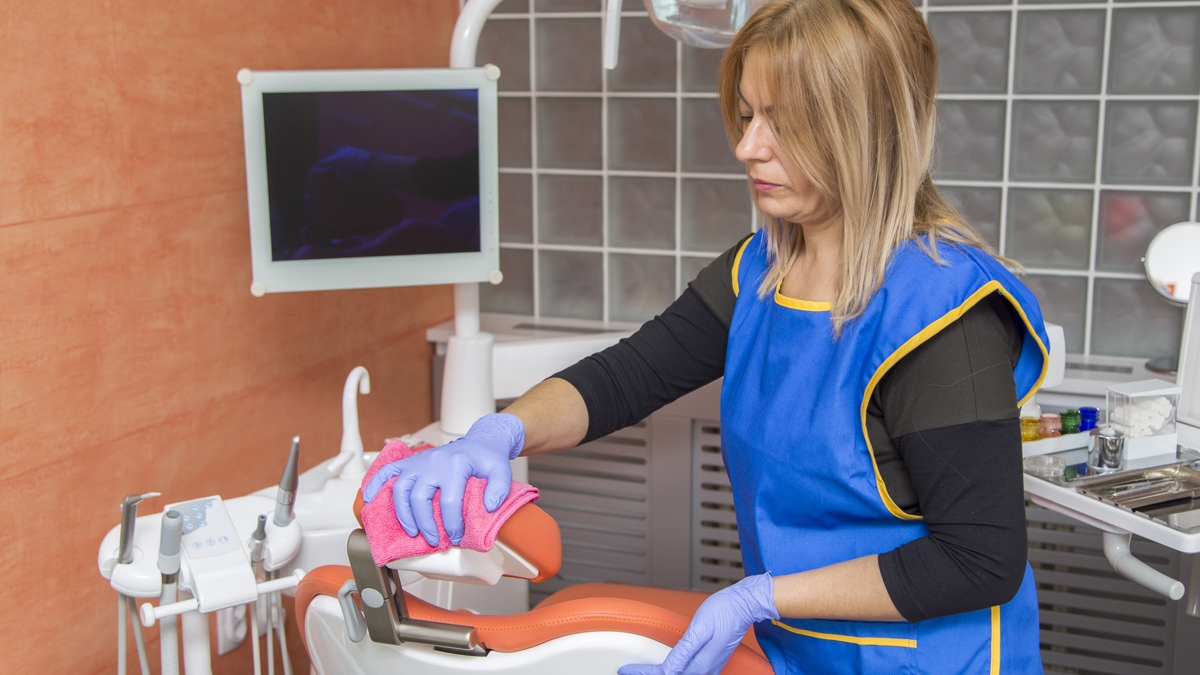
The cleaning team should not assume that every surface can be treated in the same way. New York City dental offices may have tight appointment schedules and building access limitations. Cleaning should be planned around patient flow rather than forcing the practice to rearrange its operations unnecessarily.
For practices considering dental office cleaning services, a walkthrough can help define the areas, schedule, and responsibilities. A well-planned cleaning routine can help a dental office in New York City maintain a professional environment without disrupting daily patient care. Dental offices have appointment schedules that can make access difficult.
The practice manager should identify when treatment rooms, waiting areas, restrooms, and staff spaces are available. Administrative offices, records areas, and other sensitive spaces may require access restrictions. The cleaning provider should know which areas can be entered and which remain under practice control.
Plan the handover after appointments
Closing time on a calendar may not be the moment rooms are ready for an outside cleaner. Patients can run late, staff may still be completing their own duties, and some areas may remain occupied. Explain the real handover process and identify who confirms that the agreed rooms are available.
Ask how the cleaning provider handles a delayed start or an inaccessible space. This avoids rushing preparation and helps management determine whether the proposed visit window is workable. A coordinated handover is more useful than assuming every room becomes available as soon as the final scheduled appointment ends.
When comparing an office cleaning company, NYC practices can review how reception, administration, restrooms, and staff spaces are handled alongside restricted rooms. Proposals for commercial office cleaning services in NYC should identify those boundaries. Ask how appointment changes, confidential materials, and unavailable rooms are communicated to the cleaning supervisor.
Give the provider an actual room-release arrangement rather than only the time of the last booked appointment. A delayed patient, staff task, or equipment setup can keep a room occupied. Name the practice contact who decides whether the crew should change its route or return to that area later.
Define who moves approved chairs, carts, or other equipment before cleaning. Confirm responsibility for supplied restroom products, liners, paper goods, and replenishment. Review waiting areas, treatment rooms, floors, restrooms, staff spaces, waste, and communication together so practical changes reach the people completing each visit.
Protect documents, equipment, and restricted areas
General cleaners do not need access to patient records to perform their agreed tasks. Keep files, screens, and personal materials secured according to the practice’s procedures before service begins. Explain which rooms are restricted and who can authorize entry if a question arises.
Avoid asking cleaners to organize documents or move items that may contain sensitive information. These simple boundaries support both access planning and clear task completion. They also reduce interruptions because the team can work on approved accessible surfaces without repeatedly asking whether a particular document, drawer, or device can be moved.
A practice arranging office cleaning in New York should include its building entry procedures and restricted-room instructions in the service brief. Name the person who can answer an access question after appointments. Keep that information current so replacement cleaners receive the same boundaries as the usual team without relying on informal explanations.
Inspect representative rooms and update the plan
A useful review should include the reception floor, seating, accessible shared surfaces, restrooms, and staff spaces within the contract. Record specific observations and distinguish new soil from work missed during a previous visit. If the practice has separate clinical checks, keep those under the designated clinical process.
The general cleaning review should not imply certification of clinical readiness. Separating the two makes responsibility easier to understand and allows the practice manager to address a facilities issue promptly without confusing it with a procedure that belongs to the clinical team.
Inspect several kinds of spaces rather than judging the service only from reception. Include an agreed patient-facing area, a restroom, a staff space, and an accessible corridor. Compare the observations with the assigned tasks and check whether any room was unavailable before deciding that extra service time is needed.
The cleaning agreement should clearly separate environmental cleaning tasks from clinical procedures that belong to practice staff. Renovations, equipment moves, seasonal changes, or periods of high patient traffic may justify additional detailed cleaning. Confirm the responsible team before adding those tasks to a visit.
A dental office may add treatment rooms, staff, equipment, or services. Review the cleaning scope when these changes occur. Records, administrative desks, medication areas, and equipment may require access restrictions. These should be discussed before service begins. Update the room list when those arrangements change.
Cleaning should be coordinated around the busiest patient periods when possible. Breakrooms, staff offices, corridors, and storage should not be forgotten simply because treatment rooms receive the most attention. The provider should know which rooms can be entered and which require practice approval.
Adding chairs, extending opening hours, or changing patient flow can affect the general cleaning workload. A larger team may also increase use of staff rooms and restrooms even when the floor area stays the same. Review the contract when these changes occur and ask whether access time, frequency, or periodic work should be adjusted.
If a room changes purpose, update its instructions before the next visit. Keeping the service brief current is easier than relying on informal updates that may not reach every cleaner, especially when several practice employees communicate with the provider. Use one current brief.
Frequently Asked Questions
How often should a dental office be professionally cleaned?
Frequency depends on patient traffic, practice size, treatment rooms, restrooms, operating hours, and the responsibilities assigned to staff. Many practices use recurring service with additional detailed cleaning when needed. Review appointments and actual room use when changing that schedule. Reassess the plan when appointment patterns change.
What should dental office cleaning services include?
The scope can include reception, waiting areas, floors, restrooms, staff spaces, waste areas, and agreed environmental cleaning tasks in treatment rooms. Clinical procedures should remain clearly assigned to practice staff. The practice should identify restricted areas and any preparation needed before access.
Should dental office cleaning happen after hours?
After-hours cleaning can reduce disruption, but some practices may use scheduled daytime service for appropriate areas. The best schedule depends on patient flow, building access, practice procedures, and the cleaning scope. Confirm which rooms are released and who answers questions during service.
Final Thoughts
A dental cleaning routine should support the patient journey while respecting the practice’s clinical responsibilities. Give outside cleaners clear environmental tasks, access limits, preparation instructions, and a reporting contact. Review the plan when appointments, rooms, or equipment change so the agreed service continues to fit how the practice operates.

