
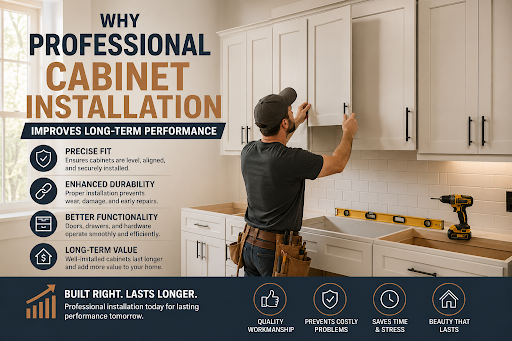
Kitchen cabinets are expected to hold heavy dishes, cookware, pantry goods, and small appliances for many years. However, strong materials alone cannot guarantee reliable performance. The way cabinets are measured, positioned, secured, and adjusted has a direct effect on their stability, appearance, and useful life.
Homeowners exploring luxury custom cabinetry for modern kitchens through a trusted local provider should also examine the installation process. A well-planned design can lose much of its value when cabinets are mounted unevenly or fitted without the proper clearances. For homeowners in Dublin, Columbus, OH, careful planning helps create a kitchen that remains attractive and comfortable to use.
What Does Quality Cabinet Installation Include?
A dependable installation begins before the first cabinet is attached to a wall. The space must be measured carefully, while the walls, floors, corners, plumbing, and electrical connections must also be inspected. Installers then use this information to determine the correct positions for base, wall, and tall cabinets.
During installation, each cabinet must be leveled, aligned, joined, and secured with appropriate fasteners. Doors, drawers, fillers, trim, and decorative panels also require adjustment. These steps contribute to quality cabinet installation because even small fitting errors can affect the entire cabinet run.
A thorough process also considers appliance openings and countertop dimensions. This coordinated approach reduces unexpected gaps and prevents cabinets from interfering with refrigerators, dishwashers, ovens, or nearby doors.
Accurate Measurements Prevent Costly Problems
Measurements influence almost every stage of a cabinet project. Installers must account for wall lengths, ceiling height, floor variations, appliance dimensions, plumbing points, windows, and walkways. If any of these details are overlooked, cabinets may not fit as intended.
For example, an incorrect refrigerator opening may prevent the appliance door from opening fully. Likewise, a poorly measured corner can leave an obvious gap or cause cabinet doors to collide. Accurate measurements help professional cabinet installers identify these risks before the cabinets are ordered or placed.
Careful measuring also supports custom cabinet installation in kitchens with unusual angles or limited space. Rather than forcing standard components into an unsuitable layout, the design can be adjusted around the room’s actual conditions.
Leveling Supports Smooth Daily Use
Most kitchen floors and walls are not perfectly level or straight. Experienced installers account for these irregularities instead of simply following the existing surfaces. They use proper leveling methods to establish a straight and stable cabinet run.
When cabinets are not level, doors may swing open, drawers may slide incorrectly, and gaps can appear uneven. Over time, the added stress may affect hinges, slides, joints, and cabinet frames. Proper leveling supports smooth operation and improves overall cabinet durability.
Alignment also affects appearance. Consistent spaces between doors and drawers give the kitchen a clean, finished look. In contrast, uneven cabinet fronts can make quality materials appear poorly made.
Secure Mounting Protects Cabinets and Stored Items
Wall cabinets carry considerable weight once they are filled with dishes, glassware, and food. Therefore, they must be attached securely to suitable wall framing or approved structural supports. Base cabinets must also remain stable so they can support countertops, sinks, and everyday activity.
Loose or unsuitable fasteners may allow cabinets to shift or pull away from the wall. Movement can damage joints, finishes, backsplashes, and nearby cabinetry. Reliable cabinet installation services use the correct fasteners and mounting points for the wall type and cabinet load.
Secure mounting is also a safety issue. Homeowners should never assume that a cabinet is properly supported simply because it appears straight from the outside.
Installation Provides a Stable Countertop Foundation
Base cabinets create the foundation for the kitchen countertop. If the cabinets are uneven or poorly joined, the countertop may lack consistent support. This can create fitting problems and place unnecessary stress on certain materials.
A stable base helps distribute the countertop’s weight more evenly. It also supports accurate sink and appliance cutouts while allowing seams to be positioned properly. For that reason, kitchen cabinet installation and countertop planning should be coordinated rather than treated as unrelated stages.
Before countertop measurements are finalized, the cabinet run should be secure, level, and complete. Correcting cabinet problems after countertop fabrication can cause delays and additional expenses.
Professional Installation Helps Prevent Moisture Damage
Cabinets near sinks, dishwashers, and plumbing connections face a greater risk of moisture exposure. Small leaks or unsealed openings can allow water to enter cabinet materials, potentially causing swelling, staining, peeling, or unpleasant odors.
The second half of a remodeling project often includes specialized work, such as professional installation for Shaker-style cabinets, around plumbing and appliance areas. Installers should check connections, protect vulnerable edges, and make sure dishwasher placement allows suitable operation and ventilation.
Careful fitting will not prevent every future leak. However, it can reduce avoidable exposure and make plumbing areas easier to inspect. Homeowners should continue checking under-sink cabinets regularly after installation.
Proper Installation Reduces Future Repairs
Poor alignment often creates repeated stress on doors, drawers, and hardware. A rubbing door may damage its finish, while a twisted cabinet box can prevent drawer slides from moving smoothly. Minor problems can gradually become more expensive when they are ignored.
Well-executed kitchen cabinetry fitting and installation services reduce these risks by adjusting moving parts from the beginning. Doors should close evenly, drawers should extend smoothly, and hardware should remain securely attached.
Professional work can also protect the manufacturer’s product requirements. Homeowners should review warranty terms because some coverage may depend on proper assembly, installation, and care. Keeping project records can provide useful evidence if a product-related concern develops later.
Maintenance Still Matters After Installation
Even long-lasting cabinets require basic care. Spills should be wiped promptly, especially near cabinet edges and joints. Hinges and handles should be checked occasionally, while harsh or abrasive cleaning products should be avoided unless the manufacturer specifically approves them.
Good cabinet maintenance also includes watching for plumbing leaks, loose hardware, and changes in door alignment. Addressing a small issue early can prevent it from affecting nearby components.
Homeowners should use exhaust ventilation when cooking and manage indoor moisture where possible. These habits help protect cabinet finishes and materials through Ohio’s seasonal changes.
Choosing Dependable Installation Support
Before hiring an installer, homeowners should ask about measurements, fastening methods, countertop coordination, appliance clearances, and final adjustments. Relevant experience and a clearly defined scope of work provide stronger evidence of expertise than broad promises.
Columbus Cabinets City helps homeowners in Dublin, Columbus, OH, consider cabinet design, storage, material, and installation requirements as connected parts of one project. This complete approach can reduce planning gaps and create a more functional finished kitchen.
Final Thoughts
Cabinet performance depends on more than the door style or material. Accurate measurements, secure mounting, careful leveling, moisture awareness, and precise hardware adjustments all influence how cabinets function over time.
By choosing experienced installation support and following appropriate care instructions, homeowners can reduce repairs and protect their remodeling investment. A properly installed kitchen is more likely to remain stable, attractive, and convenient for many years.